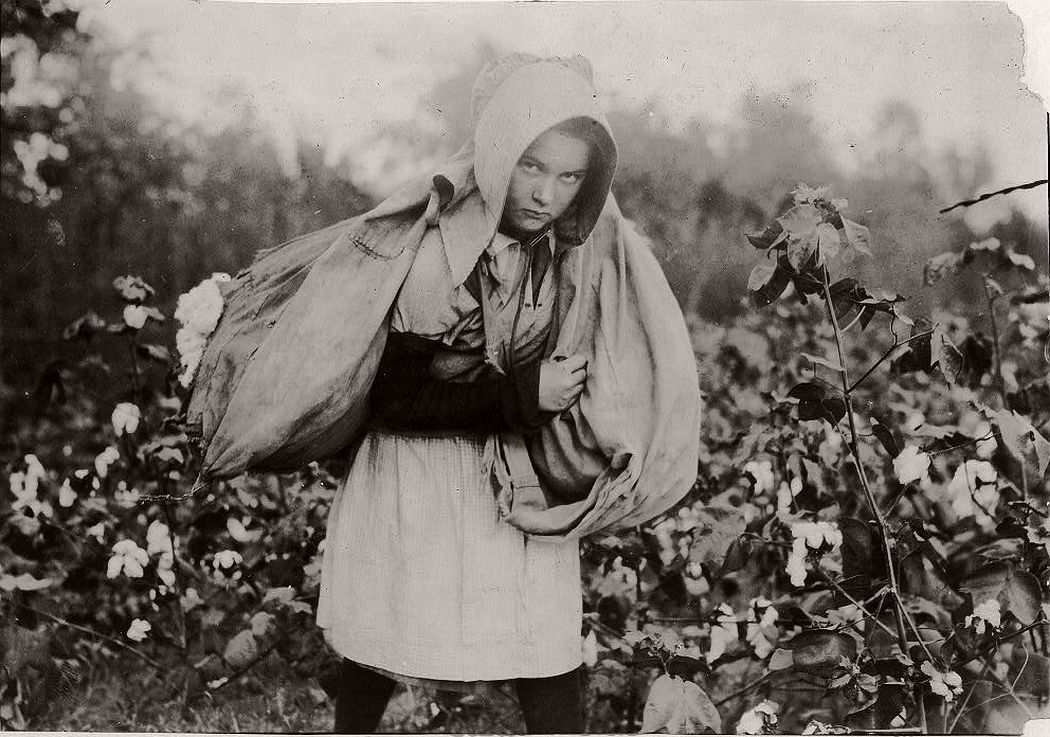
 |
| 11-yr-old cotton picker, 1911 |
Growing up, I spent many summers and holidays on my grandparents’ farm in northeast Texas.
Nana and PawPaw Joe’s house, built by his grandfather, was surrounded by cotton fields. Cotton was King in the south at one time, and still was an important crop when I was a child. I remember walking through the fields, the black earth crunching beneath my feet, “petting” the fluffy cotton sticking out of the prickly bolls, even taking some plants back home to New York for show-and-tell.
PawPaw Joe’s family had owned land in Blacklands Texas for a long time. They were far from rich, but they weren’t “dirt poor,” either. They had plenty of that rich black earth to go around.
Nana, on the other hand, endured serious financial hardship into her young womanhood. Though her father, Thomas, was a teacher, it wasn’t a well-paying field, to begin with, and schools were usually closed through much of harvest season–which was more than half the year in Texas. Thomas had to find what work he could at other times, and, in those parts, that work was mostly manual labor. Then he got his arm cut off in a sawmill, and the family saw a sharp decline in their fortunes.
So it’s likely my grandmother did pick cotton for extra money. She might not have talked about it because it was considered shameful, even if it was honest (e.g., grueling) labor and might have been the only reason your family had food for supper.
 |
| Black sharecroppers, “chopping” cotton |
Cotton has a long growing season–about 200 days–so opportunities were plentiful back then to earn money in harvesting it. It was backbreaking work–reaching, plucking, wadding, dragging a long sack behind you for hours. The bolls have prickles that sting; children often returned home from a day in the fields with bloody, swollen fingers. At the height of the harvest season, the Texas sun is merciless, the air, thick and humid, mosquitoes and stinging insects and SNAKES, plentiful. There were few labor laws to protect children–people didn’t much support such laws, anyway. In the days before economic safety nets, folks needed their kids to earn money. African-Americans, especially, depended on cotton-harvesting and growing for their income, since, of course, they were kept from most other vocations in the Jim Crow South.
 |
| Inspiration for character, “Jimmy Suggs” |
And so my main character, Leola Rose, picks cotton. Hates it, but does it. She gets good enough at it that she can snatch the cotton from the boll without pricking her fingers. When she hits her picking-and-thinking stride, she can occupy her mind with other things: Reviewing material from her pre-college correspondence courses, daydreaming of her handsome beau, Joe Belfigli, singing along to the hymns carried across the fields by the black workers, kept separate from whites, as they were even in this shared misery.
 Suzanne Moyers